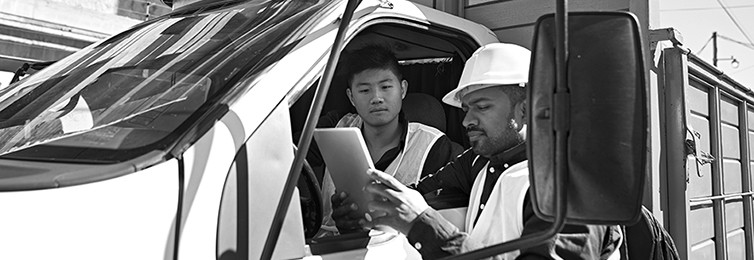
Construction inherently has a lot of moving parts––from different contractors coming on and off the job-site to various tools and supplies being delivered each day, there’s always something (or someone) coming or going. When most people think of construction, they might think of the flashy machinery associated with it, like cranes or forklifts. And while that machinery certainly gets the job done, there’s something else that helps make it all possible behind the scenes: construction fleets. Recently, we sat down with Michelle Goforth, Risk Management Specialist at Builders Mutual, to talk about the importance of construction fleets and how to create a driver safety and fleet management program that keeps your job-site running smoothly.
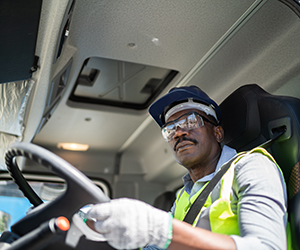
When building your fleet management program, you’ll of course first need to understand what’s in your fleet. Depending on the size of your company and job-site, a fleet can range from just one vehicle to upwards of 1,000 vehicles. From there, you can start putting parameters on how your fleet is handled to maximize efficiency, safety, and peace of mind.
Tips for creating a safe fleet management program
Implementing a driver safety and fleet management program is critical for overall job-site safety. Beyond reducing the chance of automobile accidents, a well-run program can also help contain costs, protect workers, and uphold the reputation of your company. As you think about shaping your program, keep in mind:
1. Maintenance matters.
If your fleet can’t be trusted to run safely, it can’t be expected to drive safely. Be sure your team is proactively taking care of the wear and tear of tires and general vehicle maintenance so that every time your fleet is deployed, it’s in the most dependable shape possible.
2. Hire drivers carefully.
You need to be able to trust the people getting behind the wheel of your fleet––which means doing your due diligence up front. If you’re hiring a driver, be sure to do a thorough background check that includes their driver record before handing over the keys.
3. Safety starts at the top.
If you want safety to be a company-wide value, management has to walk the walk, too. This means regularly setting clear safety goals, enforcing clear safety protocols, and communicating your stance along the way. In order to effectively build a culture that prioritizes safety, its importance also needs to be emphasized through periodic employee monitoring and meaningful employee rewards.
4. Drive progress with training.
Safety methodology is constantly evolving. Keep drivers on top of their game by investing in ongoing training that helps them continuously make smart decisions for your fleet, on and off the road.
At the end of the day, your fleet is a part of your job-site that just so happens to be mobile. It deserves the same rigorous attention to detail and safety as anything else. We’re proud to continuously advocate for safety, both on the road and off. Our Work Safe: Drive to Protect program offers an extensive library of training materials and video resources designed to equip your team with the knowledge needed to prioritize worker safety, others on the road, and your bottom line.
Whether you’re crafting or revamping your driver safety and fleet management program, we’re here to help. To start the conversation, reach out to your Risk Management Consultant today.


 Find an