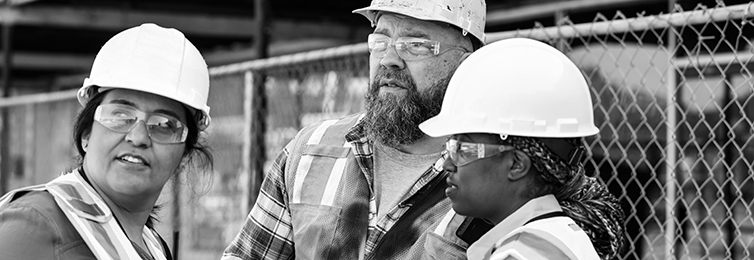
As an industry, construction houses a variety of different specialities. On any given project, supervisors will need to pull in multiple trades to get different parts of the job done. So, how do you make sure contractors are working safely with multiple jobs going on at once? We recently talked with Alex Terrier, Senior Risk Management Consultant at Builders Mutual, about what supervisors can do to uphold quality and safety standards as contractors come, go, and work alongside each other.
Setting safety expectations across multiple trades
No matter who is working on your job-site, they should know what you expect when it comes to safety. Setting high standards of safety starts long before a job is kicked off. Be clear about how highly you prioritize safety as early as during the bidding process, and then continue to reiterate that truth the closer contractors get to your job-site––including during important steps such as site orientation, on handout sheets, and more. This sets a critical tone up front, making requirements known and ensuring everyone is playing by the same set of rules when it comes time to get to work.
Communicating effectively with multiple trades present
After you’ve made it known safety is a non-negotiable, you’ll need to help contractors work together to make it possible. When it comes to building, enforcing, and maintaining standards across different trades and working styles, communication is crucial. Here are some tips for keeping it effective:
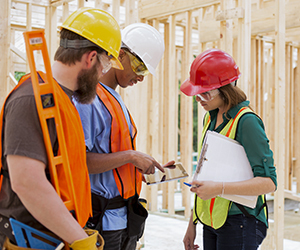
- Host daily meetings: The only constant in construction is change. From timelines to objectives, something’s always in flux. In order to keep all of your contractors aligned, aim to host at least two meetings every day: one in the morning and one after lunch. This will allow supervisors from different teams to get the most up-to-date information, which they can then relay to their own crews so everyone on site knows what’s happening.
- Let supervisors lead: Supervisors offer a direct point of contact to every trade on your job-site. Communicate any changes, issues, or need-to-know items immediately with them so they can get the information out to the greater team, ASAP. When time allows, it can also be a good idea to perform routine Job Hazard Analysis with supervisors to promote awareness around the site’s biggest risks. Supervisors and general contractors should also try to be mindful of job-site congestion while scheduling multiple trades.
- Use visual cues for clarity: Day to day, contractors are often working on top of each other on the job-site. Quite literally, you might have one team working overhead while others make progress on the ground. The tighter your environment, the more up against safety hazards people will be. To maximize transparency and minimize risk, encourage every team to clearly mark their workstation with help from signage, cones, and barricades.
- Promote teamwork: Having a safe job-site is in everyone’s best interest. And making it a reality has to be a group effort. Aim to create a job-site culture that puts safety above speed so teams know when there’s a conflict of interest or miscommunication, it’s okay to stop and regroup. Reward contractors for being respectful of other teams’ stuff, keeping their work area tidy, and labeling all of their equipment. Lastly, take every opportunity to enforce the idea that if contractors see something, they should say something. The more eyes you have looking out for your job-site, the safer it becomes.
Aligning multiple trades around safety protocols is no small task––but you don’t have to go it alone. At Builders Mutual, our specialists are happy to act as an extra set of hands on your job-site, doing walkthroughs, guiding corrections, and performing supplementary training when necessary. Contact your Risk Management Consultant today to come up with a game plan to improve job-site safety for your whole workforce.
 Find an