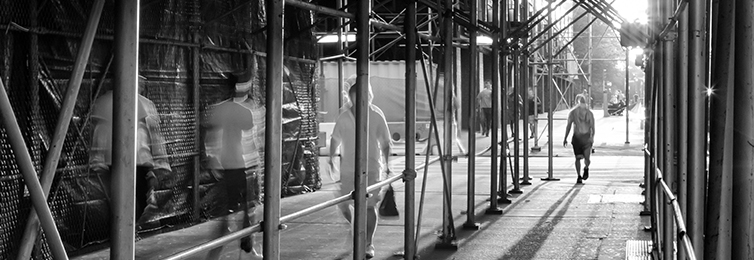
When it comes to keeping people safe on the job-site, it’s not always just about contractors. Depending on where teams are working, pedestrian safety is also essential, and it’s important to consider the risks to pedestrians too. Recently, we talked with Michael Vanhooser, a Senior Risk Management Consultant at Builders Mutual, about what should be considered when it comes to pedestrians––and how you can proactively protect them.
Understanding Risks to Pedestrians
One of the major difficulties with keeping pedestrians safe is that they’re almost entirely out of your control. Random passersbys aren’t attending your safety briefings, reading your company manuals, or interacting with your job-site with a comprehensive understanding of its inherent risks. Yet, when job-sites are located in urban areas, pedestrians are walking by frequently and need to be accounted for in your safety plans. Even rural areas carry pedestrian concerns, such as kids playing.
As you think about what risks are most relevant to pedestrians, it can be helpful to consider your job-site from top to bottom––literally assessing and categorizing risks at heights, ground level, and below ground. Breaking your job-site down like this often feels more manageable than looking at it as a whole. As you analyze each of these areas, you’ll probably end up thinking about dangers such as:
At heights: Dangerous swing radius of equipment and cranes, falling objects, and severe weather compromising the integrity of scaffolding or other job-site features.
Ground level: Interrupted sidewalk access, pollution control, and exposed equipment.
Below ground: Kids seeing trenches as play opportunities; open holes that people could fall into; and temporary damage to roads, walkways, and underground utilities.
Working With Pedestrians in Mind 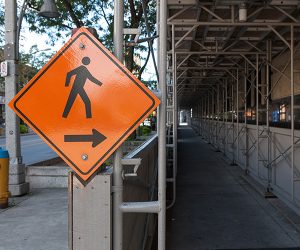
The best thing you can do for pedestrian safety is think proactively. Some steps you can take include:
Put your “lawyer hat” on
To prevent things from going wrong, you need to seriously imagine the possibilities. Try thinking like a lawyer: What could happen to a pedestrian on your job-site that would result in an accident? Remove common sense from the equation to get the most cautious picture of risks.
Maintain codes and documentation
Codes are in place and documentation is required for a reason. Being conscious of both is a good baseline for overall safety, encouraging best practices, regular walkthroughs of the job-site, and more.
Use signage, barriers, and buffers
It might not be obvious to pedestrians what’s dangerous and what’s not. Instead of relying on their instinct, take it upon yourself to make risks harder to come by. Create barriers around heavy equipment or particularly dangerous parts of the job-site (such as a trench), construct canopies over pedestrian walkways that pass near work at height, and add signage to places where you want pedestrians to be extra aware.
Don’t leave equipment vulnerable
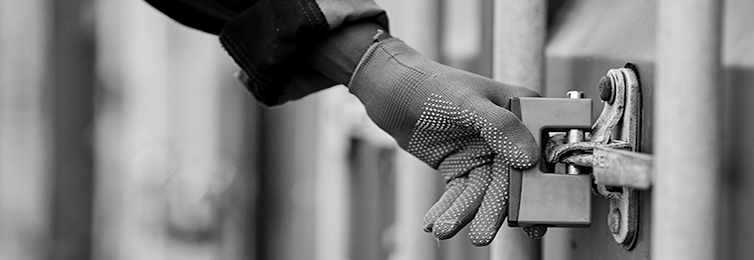
When contractors are off the clock, their equipment can be tempting to pedestrians who think messing around with it might be funny––or even others with more sinister ideas. Keep machinery as inaccessible as you can. Never leave keys inside, lock up what you can, and take the responsibility seriously.
Employ licensed operators
Never cut corners when it comes to who is operating dangerous machinery. Only use well-informed operators with proven experience and a high comfort level in handling every part of the job––including potential overlap with pedestrians.
Avoid making assumptions
Just because something was once safe, doesn’t mean it will remain that way. From bad weather to busy work days, job-sites are too active to assume earlier precautions will stay in place. Come back to risky areas on a frequent basis for confirmation and consistency.
Be thorough and creative
Every job-site is unique––so your approach to safety shouldn’t be copied and pasted. Be intentional about thinking through risks, and get creative about what could work to prevent incidents.
Thinking of everything can be overwhelming. But you don’t have to do it alone. At Builders Mutual, we can help you develop a comprehensive safety plan that maximizes pedestrian safety. From walking the job-site with you and acting as your second set of eyes to providing you with industry-leading resources that guide you in being more proactive than reactive, we’re here to help. Reach out to your Risk Management Consultant today to strategize how to keep pedestrians safe on your watch.
 Find an